
Using the Grid Method to Teach Real-World Skills



How many times have you found yourself cruising social media and coming across a post or meme that looks something like this? I know for me, playing the recorder is not one of my real-world skills.
Oh, and don’t forget my personal favorite from students, “When am I ever going to use this in real life?” It’s generally true that I’ve never had to play a recorder as an adult or graph a non-linear function, but I also know that some people do that daily in their chosen careers. So, when I introduce the unit I’m writing about today, I always tell my students that we will tackle something they will definitely need as adults.
Teaching Job Skills
My favorite unit in my Exploring Careers course is job skills. It’s not technically part of the official curriculum. However, I have enough wiggle room to make it fit. Also, I am passionate enough to justify why I need to include it in my course of study. Everyone will need to be employed at some point, and at 12-14 years old, many of my students are starting to think about getting jobs. Being able to learn these skills with examples that look real creates buy-in both for students and parents. What better place to teach students how to read a paystub, fill out a job application, read a resume, etc., than a course about careers?
How I Use the Grid Method to Teach Skills for Life
I structured this unit using the Grid Method. The students move through leveled mastery activities to build their knowledge of the various topics and then end the unit with a traditional assessment and a simulated job search. The grid is structured with DOK levels in mind.
Students start at level 1 with vocabulary, instruction on choosing a career, signing their name, and learning about soft skills like communication. Level 1 is a place for them to learn basic information at DOK level 1.
Level 2 of their grid is where they use real-life examples to learn skills. I love this level because I found examples of paycheck stubs, job ads, and a job application they can fill out. Filling out a job application was one of my favorite activities to create for my students.
I found a blank job application online, but I didn’t want to ask my students for their social security numbers or other personal information. Instead, I wrote a short story about Spongebob quitting the Krusty Krab and getting a new job. I created the documents he would need to complete his application (resume, ID, etc.) For many of my students, this is the first resume they have seen!
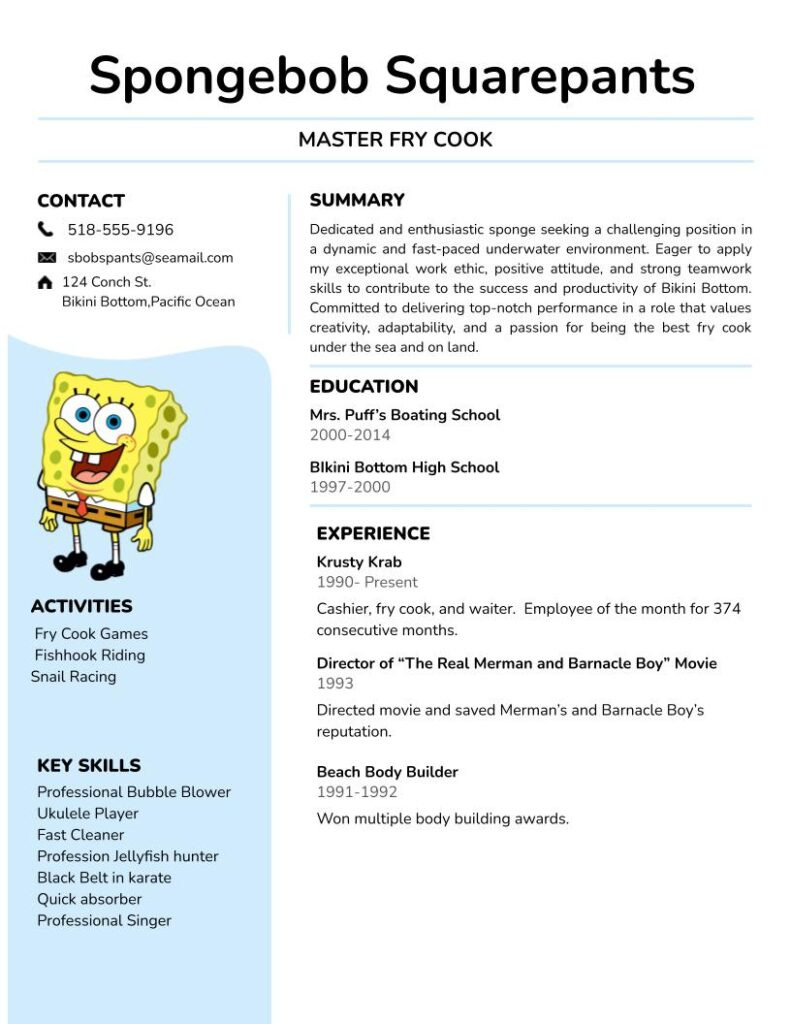
Level 3 is the assessment level. At this level, they take a test and then do a simulation. The simulation has them choose a job from an online “job board,” fill out an application, “interview,” and then read their pay stub. Applying what they learned to a “real-life” situation is an excellent way to show their knowledge in a way that isn’t merely recall. Hopefully, when they get a little older and apply for their first job, they remember learning how to fill out job applications with Spongebob!
Real World Experiences Create Relevance
Students must see relevance in their learning when they can. Creating classroom experiences that are “real” gives opportunities for students and their families to see the connection between the classroom and the world. Taking the time to create these connections is essential in all content areas. I challenge you to find opportunities to connect to the “real world” when possible.